
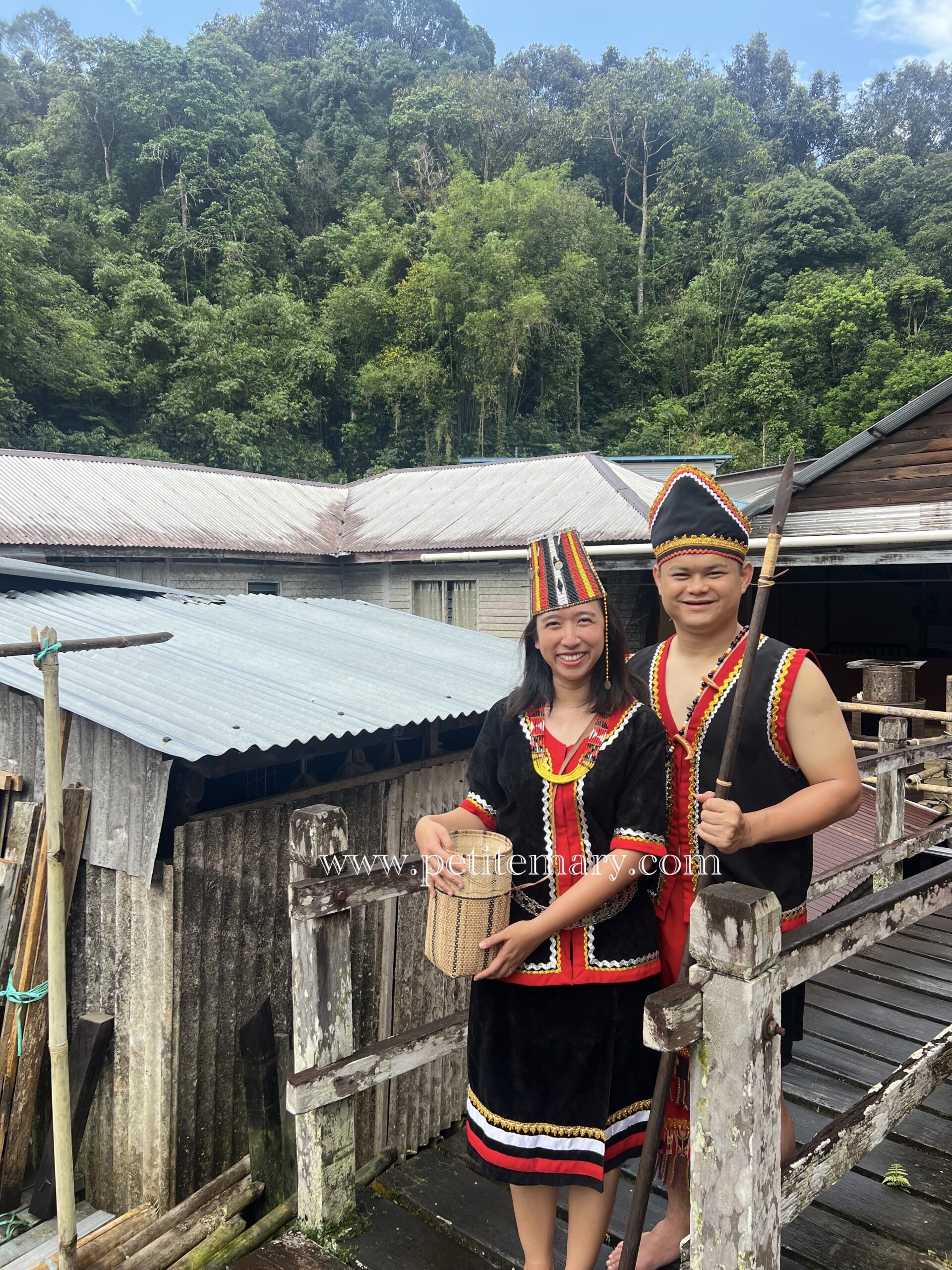
Living and visiting a Sarawak longhouse was a unique and enriching experience.
It offered a deep dive into the culture and traditions of the Bidayuh Tribe, one of the many fascinating ethnic groups in the Land of the Hornbills.
The beauty of Sarawak lies in people of various backgrounds and ethnicities. Each tribe paints a unique story and history that has been around for more than a hundred years.

Our host, Uncle Joseph, a warm and welcoming figure, picked us up from Marianne Lodge in the early morning. We were about to embark on a Sarawak longhouse tour adventure, guided by his deep knowledge and passion for Bidayuh’s culture and heritage.
Located 60 km from Kuching, it was a pleasant hour-plus ride in the misty morning. A row of trees bordered each side of the road, each row alternating every other tree as Bamboo and Bananas.
Durian trees can be seen randomly standing tall from one coordinate to another. This, too, is based on Uncle Joseph’s Joshua commentary and has its reason.
“Di Sarawak, we are very diversified – from orang Melayu, orang Bidayuh, orang Iban, and so many more. Dulu dulu, Bidayuh were all headhunters. Our ancestors potong kepala, and gantung di depan rumah. It’s a symbol.
You came back with a head implying that you’re a hero, or you don’t don’t – which means your life has been redeemed, and you’re you’re never returning.
It’s either your life or the enemy’s life. Jangan risau, we don’t do that anymore,” Uncle Joseph smiled.
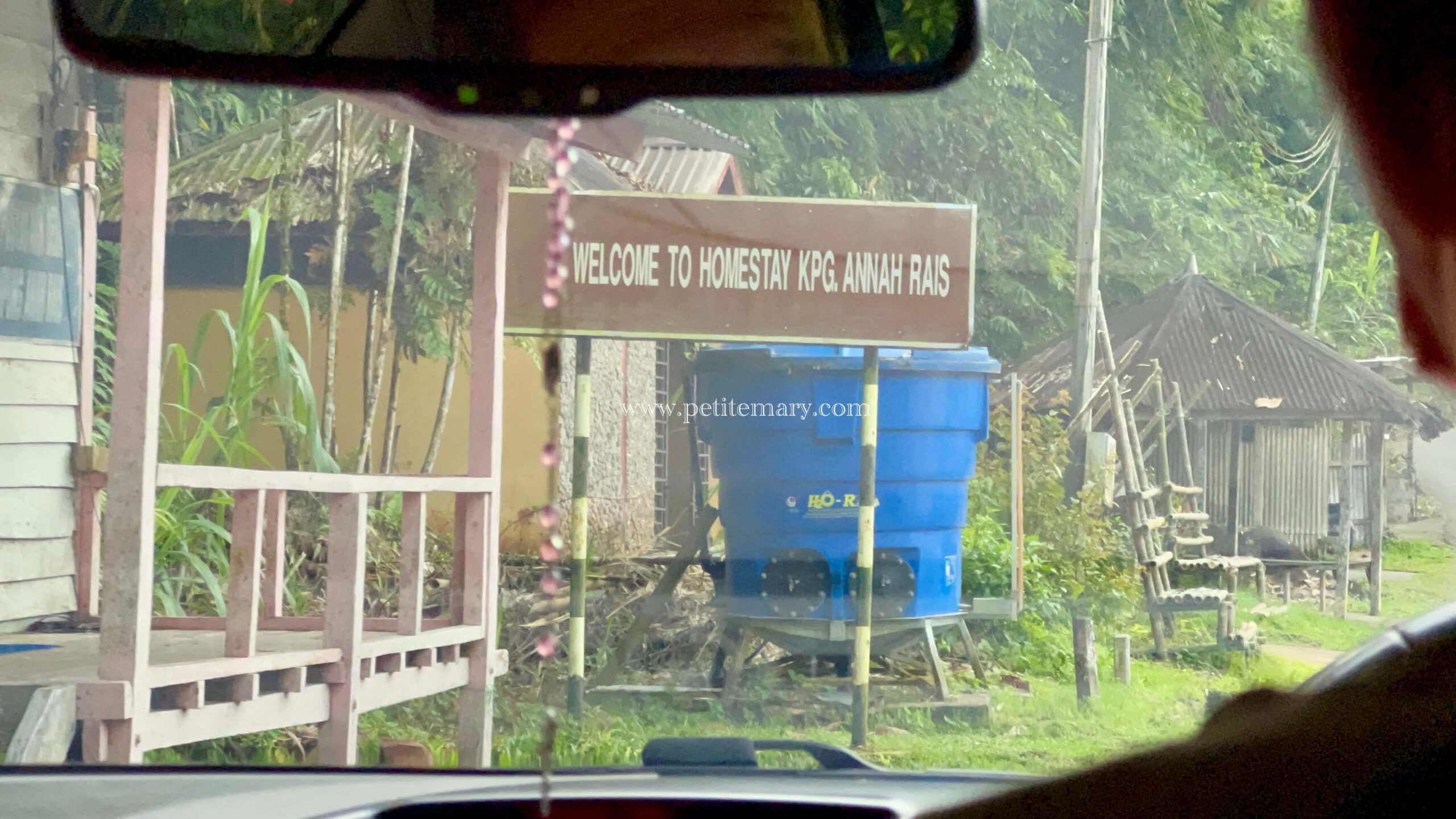
As we approached the Annah Rais Longhouse Homestay, the panoramas changed from one scene to another. The landscape changed as we made our way deeper into the rainforest along Jalan Borneo Height, with an extraordinary view of the endless mountain range of the Padawan Highlands.
He then added, “The Bidayuh tribe is known as the Land Dayaks. Contrary to the Iban tribe, they are the Sea Dayaks.
Where we are going now, you’re going to where I live, where my family lives, and where all my relatives live. Everyone knows everyone. We’re all a family.”
On our way, we stopped by Semenggoh Wildlife Center first to witness the Orang Utan feeding time. It was a fascinating experience to see these intelligent creatures in their natural habitat, swinging from tree to tree and enjoying their fruits.
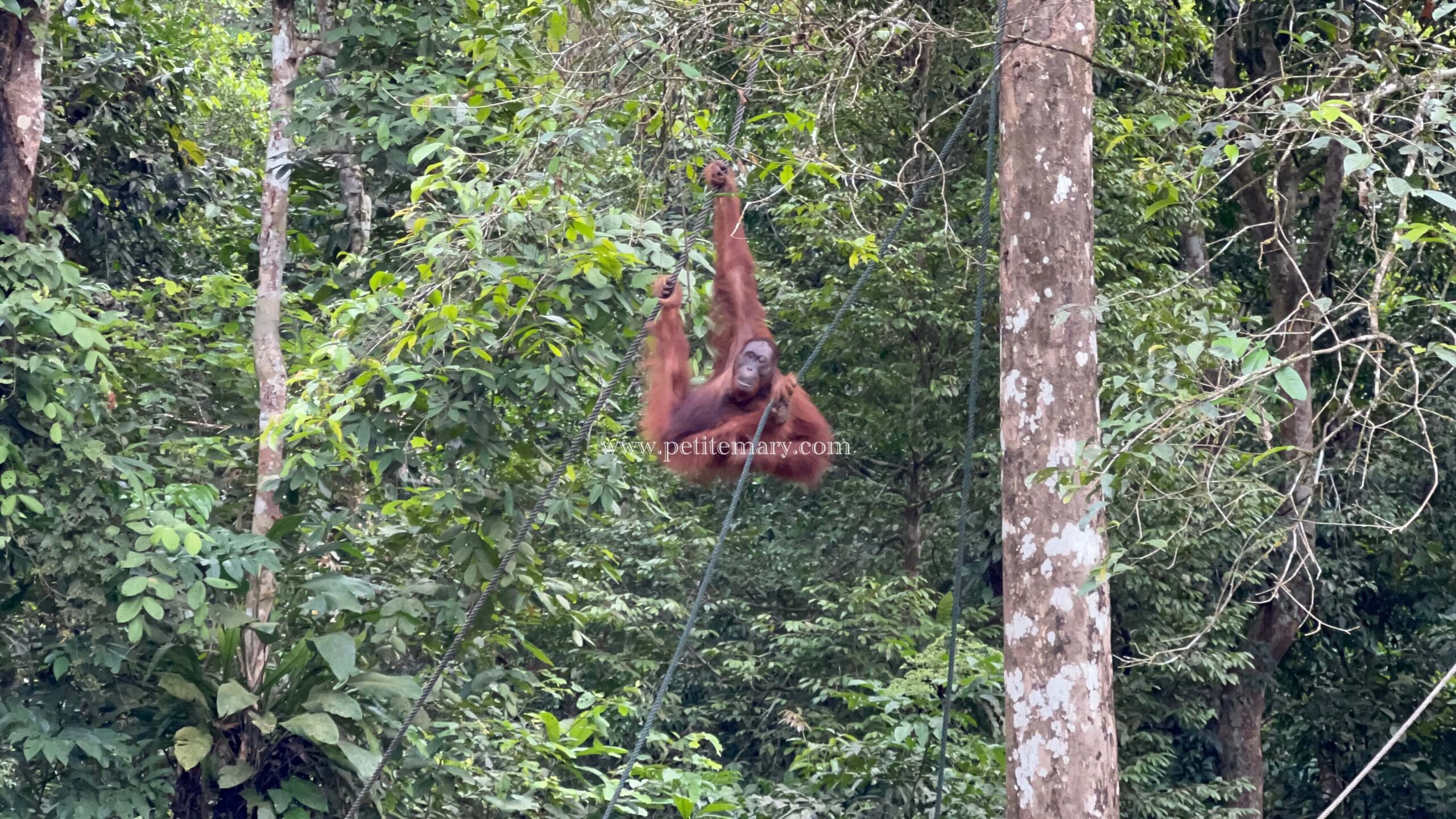
FEED ORANG UTANS : Visiting Orang Utans in Semenggoh
By the time we arrived at Annah Rais, it felt like we were already home. Visitors will be welcomed with ‘tuak’, a local fermented alcoholic drink.
Disclosure: This post may contain affiliate links that, at no additional cost to you, I may earn a small commission if you purchase through my links. I hope you find the information here useful! Merci beaucoup 😀
Where To Visit A Longhouse in Sarawak
There are a few longhouses that you could consider visiting or staying in. When I did my research, here are the top picks for a longhouse in Sarawak :
- Annah Rais Longhouse (Bidayuh)
- Saloma Longhouse (Bidayuh)
- Batang Ai Longhouse (Iban)
- Lemanak Longhouse (Iban)
Each place belongs to a specific ethnicity, and each ethnicity has different customs, regulations, rules, and traditions. Most of the longhouses are located outside of the city center, with some going very deep into the jungle.
For Annah Rais, it was pretty accessible, making it a popular choice among travelers on a short trip to Sarawak. It is far enough from the hustle and bustle, but close enough to the abundance of greenery forest.
On the contrary, I’ve heard that getting to Batang Ai longhouse is a little challenging since it is deeper into the dense rainforest. It could take hours to get there.
So, while planning for your Borneo itinerary, I’d suggest you to really look into what kind of experience you are looking for and how much time you have in Sarawak.
Staying at a Bidayuh Longhouse – How To Book
Before I booked the stay at Annah Rais Longhouse, I had a thousand questions.
Would it be comfortable?
Would it be far from town?
Could I actually survive being away from the internet and city life for a while? 🥴
But I was eager to find out what the longhouse was all about. After researching for quite some time, I decided to go for Annah Rais Longhouse.
There are a few homestays available at Annah Rais Longhouse. But I only managed to find two of them online for your reference:
- Annah Rais Homestay (We stayed here with our host, Uncle Joseph)
- Kellon Homestay Annah Rais Longhouse
As much as the people of the longhouse welcome walk-in guests, I suggest you stay for a night or two to experience the Bidayuh culture and traditions.
Insider Tips: If you’d like a guide during your visit, I highly recommend you book a half-day tour. There is no on-site guide available if you walk in.
I stayed for three days and two nights, and everything was included, including Bidayuh food, fun activities, and transportation (return trip), which was a good bargain!
QUICK DAY TRIP: Half-Day Annah Rais Bidayuh Longhouse Tour in Sarawak
Living in a Longhouse
What is a longhouse?
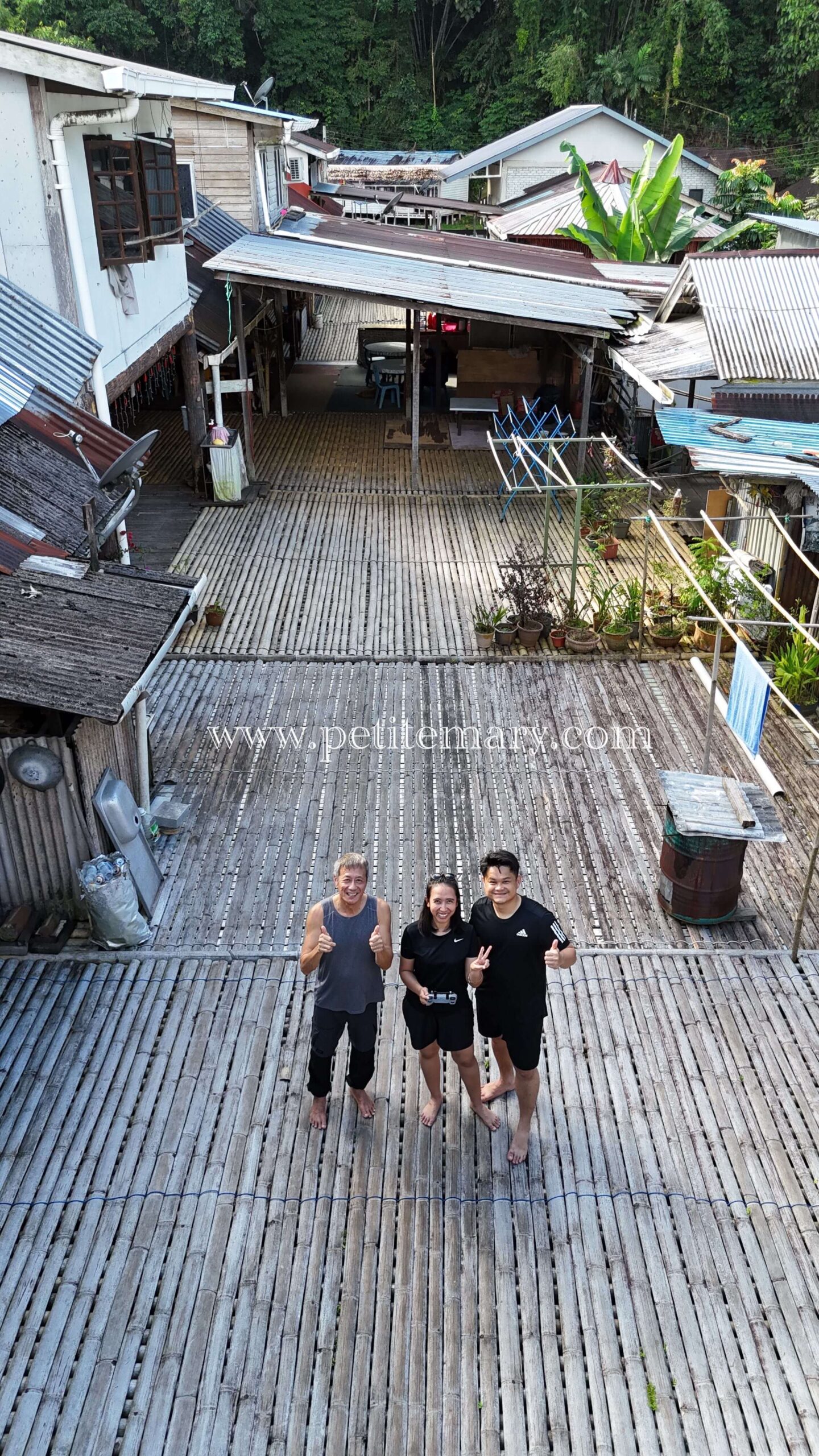
Wooden houses were built on stilts along the riverbank. Each door (pintu) is sectioned off by a wall and has a common corridor or a social area right in front. They were meant to be homes for large extended families.
The more doors it has, the longer the longhouse is. Everything and everyone is under one roof.
In short, Annah Rais is a homestay within the Sarawak longhouses. Some of the houses have given way to modernity, while the rest preserve the original form of the longhouse intact and robust.
PEOPLE ALSO READ: Tips in Preparing for Mount Kinabalu
What is it like?
It felt like I had taken a step back in time. Life was moving rather slowly.
When we woke up in the morning, most of the Longhouse people had gone to take care of and work on their farm. As we sat by the veranda in the cold, misty morning, the sky was beautiful. The birds were chirping as if they were singing in a choir.
Aunty Jane, who lived across our pintu, opened her shop. She arranged her collections of tuaks on the table, some tree bark (when boiled, resulting in deliciously satisfying tea), and some keropok ubi (potato crackers).
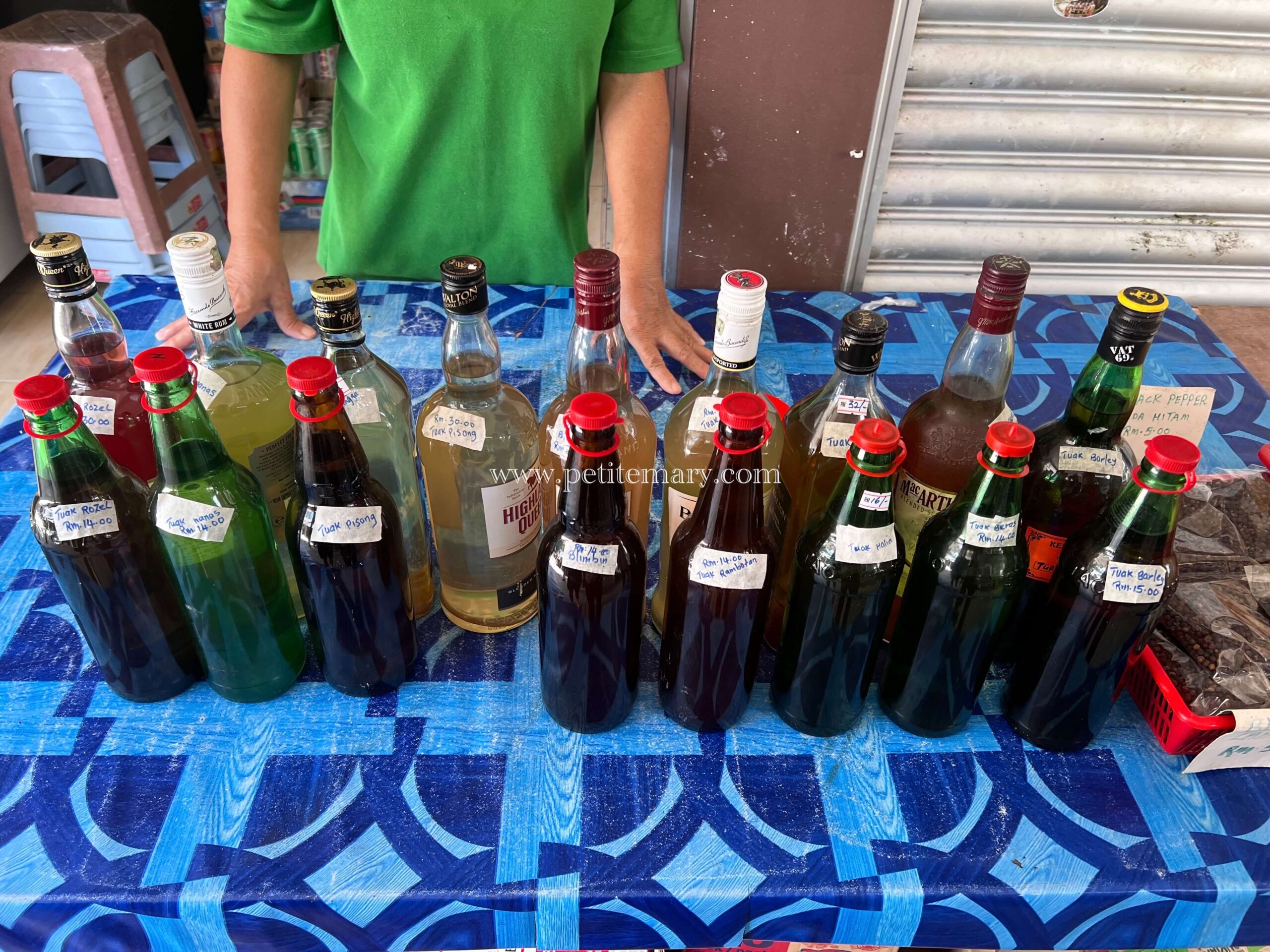
Our neighbor next door was fixing his lamp. Aunty Katherine (our favorite cook for Bidayuh food), who lives a few doors away, brought her grandson out to play and get some fresh air.
It was exactly what I needed rather than what I was looking for. In a fast-paced world where modernization is a trend, the people in the longhouse were rather peaceful and relaxed.
It’s a simple and beautiful way of life.
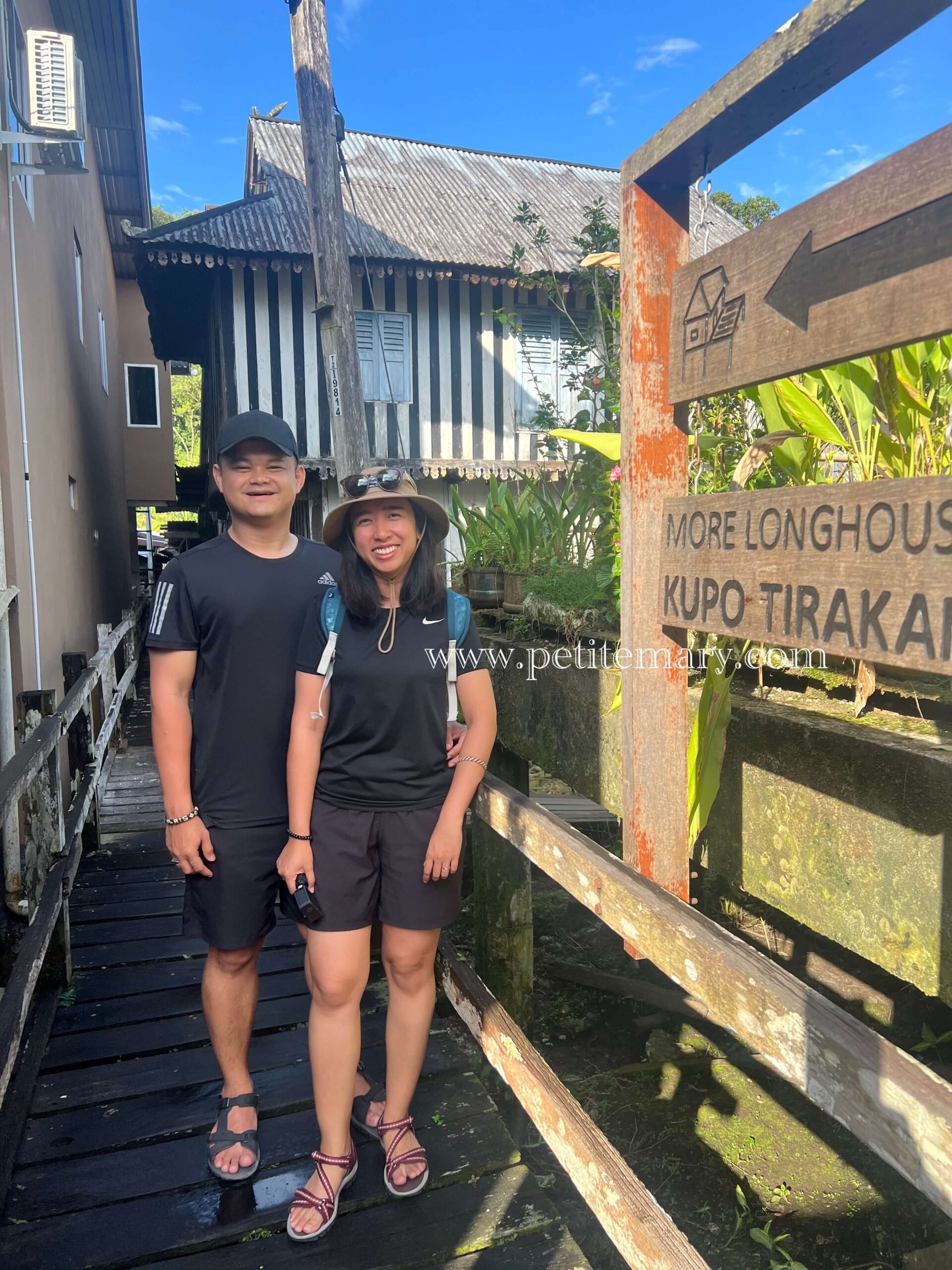
Uncle Joseph took us on a slow stroll to discover the concept of longhouses. Each house, or what is familiarly known as a pintu (door), is built next to one another.
Annah Rais consists of three longhouses of different ages:
- Kupo Saba (front row – 100 years)
- Kupo Tirakan (middle row – 120)
- Kupo Sijo (back row – 200 years)
We stopped by the main highlight of the longhouse. Uncle Joseph told us a story about headhunting in ancient times. In front of us were the human skulls kept in the ‘Panggah‘ (headhouse).
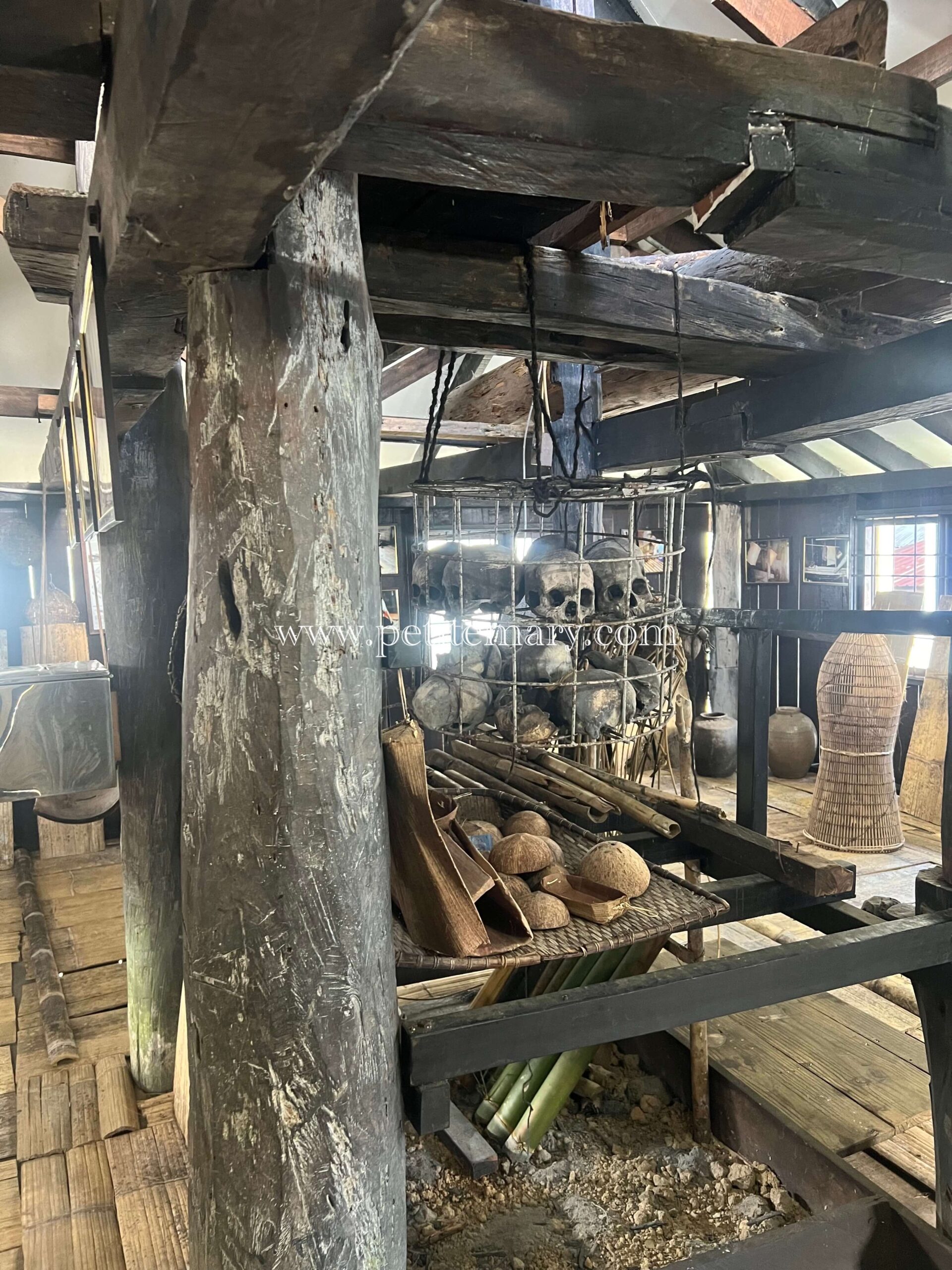
As Uncle Joseph described the situation in greater detail, it was as if we were in the same room as fierce warriors reputed to be the most formidable headhunters on the island of Borneo.
It is gruesome yet fascinating to learn about the tradition of headhunting.
The longhouse is attached to a bamboo walkway. It is very sturdy and robust. It reminded me of my visit to Hong Kong, where I saw the endless piles of bamboo used to construct scaffolding. Mindblowing.
As we walked on the bamboo floor, the creaks burst into silence and peaceful ambiance. Every step creaked.
In ancient times, bamboo was very useful during the night. The creeks were their alarm, signaling that their longhouses had been breached and the enemy was close.
Despite trying to tip-toeing my way across one door to another door, it’s very challenging for me not to make a single sound. Haha.
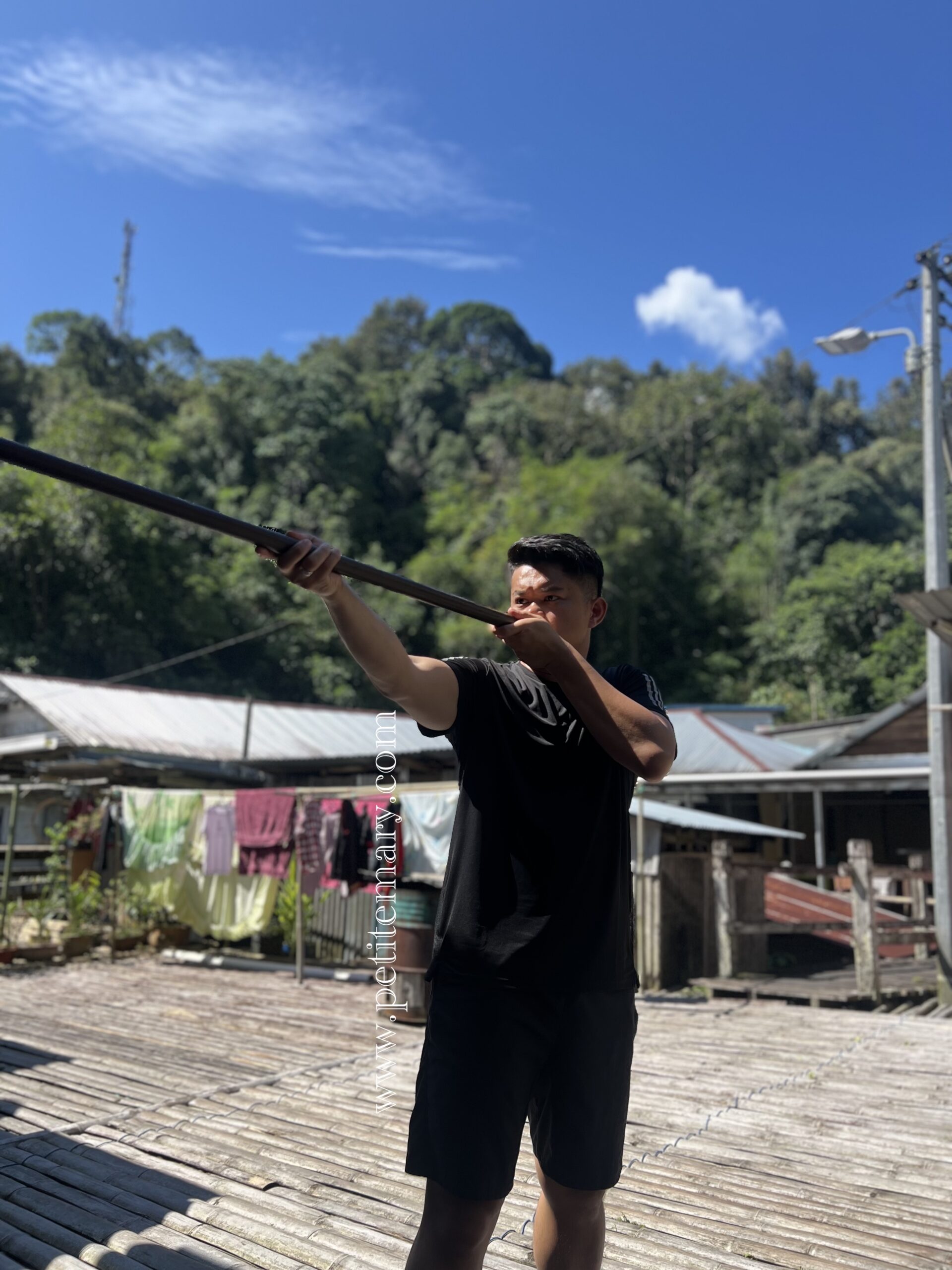
If it was back in the old days and I was the enemy, I’d probably be killed by the sumpit (blowguns) and drop dead on my first step.
READ MORE: 10 Days in Borneo Itinerary – A Traveller’s Guide to Sabah and Sarawak
What We Did at Annah Rais
I can tell you that we did so many activities, and we enjoyed every single one of them, thanks to Uncle Joseph and the lovely Bidayuh families we met during our stay.
Sit tight, as I’ll bring you on an adventure!
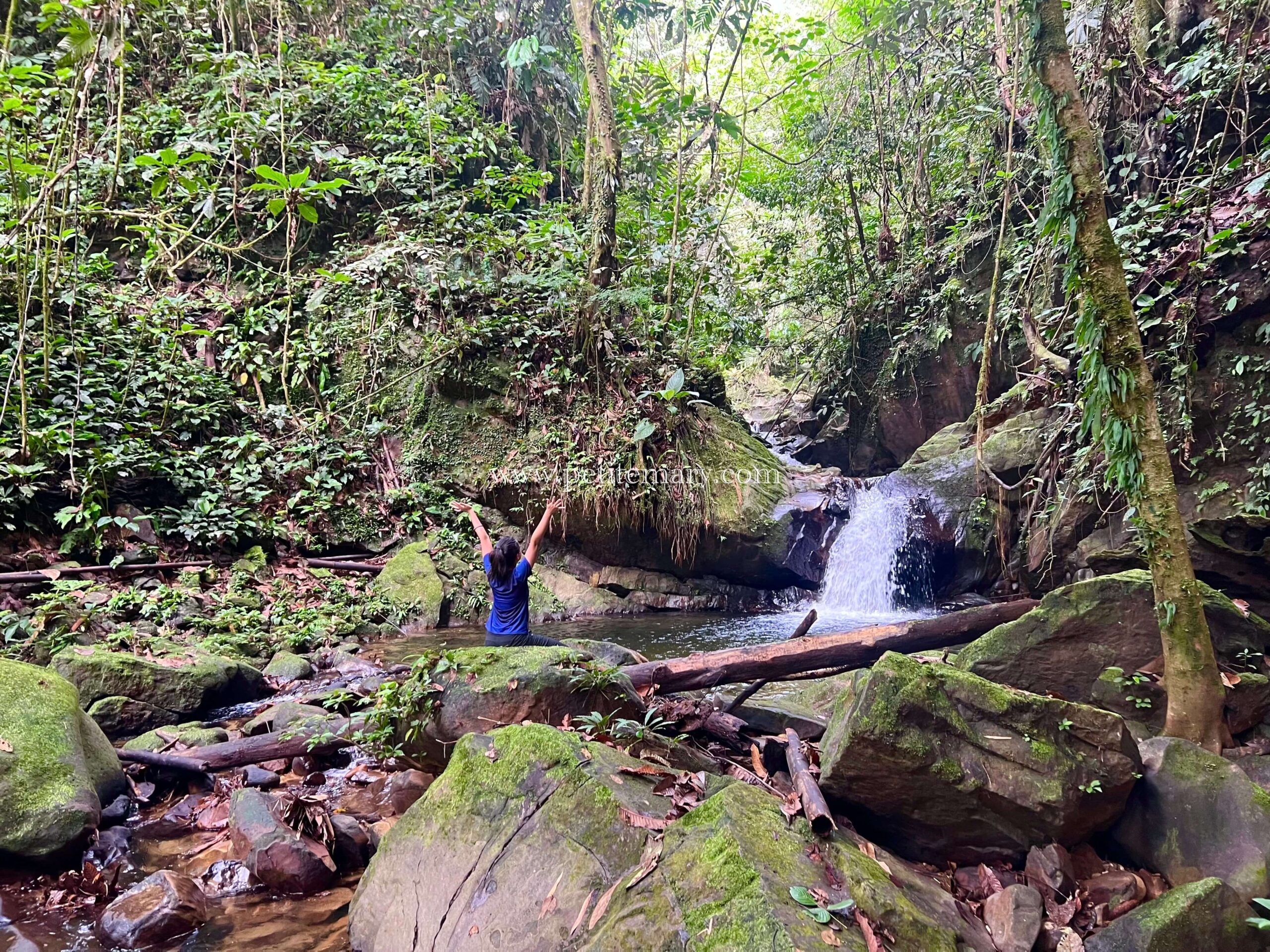
Jungle Trekking & Waterfall Dipping
Out of all the people we’ve met at Annah Rais, I will not forget the iron lady who accompanied us most of the time for our outdoor activities, Siti, or rather Kak Siti.
A very petite lady with a pure heart and an enticing smile. Plus, she is one strong lady.
As we jungle-tripped into a dense jungle, she led the way with her sharp parang, making sure the pathway was clear. Passing by local farms, she explained that all of the plantations could be eaten and were usually brought back to the longhouse to be cooked and served.
The true definition of farm-to-table cuisine is something we have experienced at Aunty Katherine’s (Remember? Our favorite cook :-)).
Kak Siti strived forward in her long football socks, the legendary kampung Adidas, and a parang on her hand. As we went in further, I realized that the forest was so green and peaceful.
Kak Siti basically shared her knowledge about the types of plants growing along the way, and we even tasted raw onion stalk!
From a distance, we could hear the river flowing. One bamboo bridge after another. Then, the landscape changed from dryland to wetland, meaning we were getting closer and closer to the waterfall. The shades of the tall trees covered the whole area, and sunlight could not penetrate.
I became worried about something that I was not a fan of, and I hoped not to face it, so I marched on! My husband wasn’t complaining, so why should I?
Then I saw it. On one of the leaves on the ground. Wiggling, wiggling, trying to find a thing to stick itself onto!
Oh no, I have entered the bloodsucker’s area.
The worst part was about meeting the whole families of leeches—it was the fact that I was wearing hiking sandals without socks! :O
I screamed, “Kak Siti, Kak Siti, I saw pacat (a leech)!” She turned around and asked if I had one on me. I said no, but I saw it.
She was like, “Ok, sikpa, kita jalan lagi. Nak sampai dah. Kalau ada pacat, nanti bagitau.” (Okay, don’t worry. We’ll move forward, almost there. If there are leeches on you, let me know.)
The pathway was getting slippery and wet, and there were more leaves.
More leaves = higher chances of leeches hiding.
When we finally arrived at the waterfall, I was worried about the leeches more than the beauty of the waterfall! Haha. I am definitely not a fan of leeches.
We sat on a small wooden bench, and I felt it—a stinging feeling that lingers. I took out my sandals and saw a bunch of leeches on my feet, getting a little bit too comfortable with my feet.
Kak Siti came to the rescue with a little tool, small but magical and powerful! She tapped it on the leeches, and they came off without hesitation!
It’s not lighter or salt. But almost every Malaysian has it at home. Can you guess what it is?

As soon as the leeched came off, I went to take a dip while my husband was already enjoying the refreshing waterfall.
The water was refreshing and cold, and it came straight from the mountains. As I was floating in the water, I realized that Malaysia has so much to offer. Sometimes, I wish places like this were tucked away forever, away from mass travelers.
It’s too beautiful to be ruined.
The waterfall is secluded, and only locals can take you there. It’s a 30-minute hike in and another half an hour out.

Bamboo Rafting
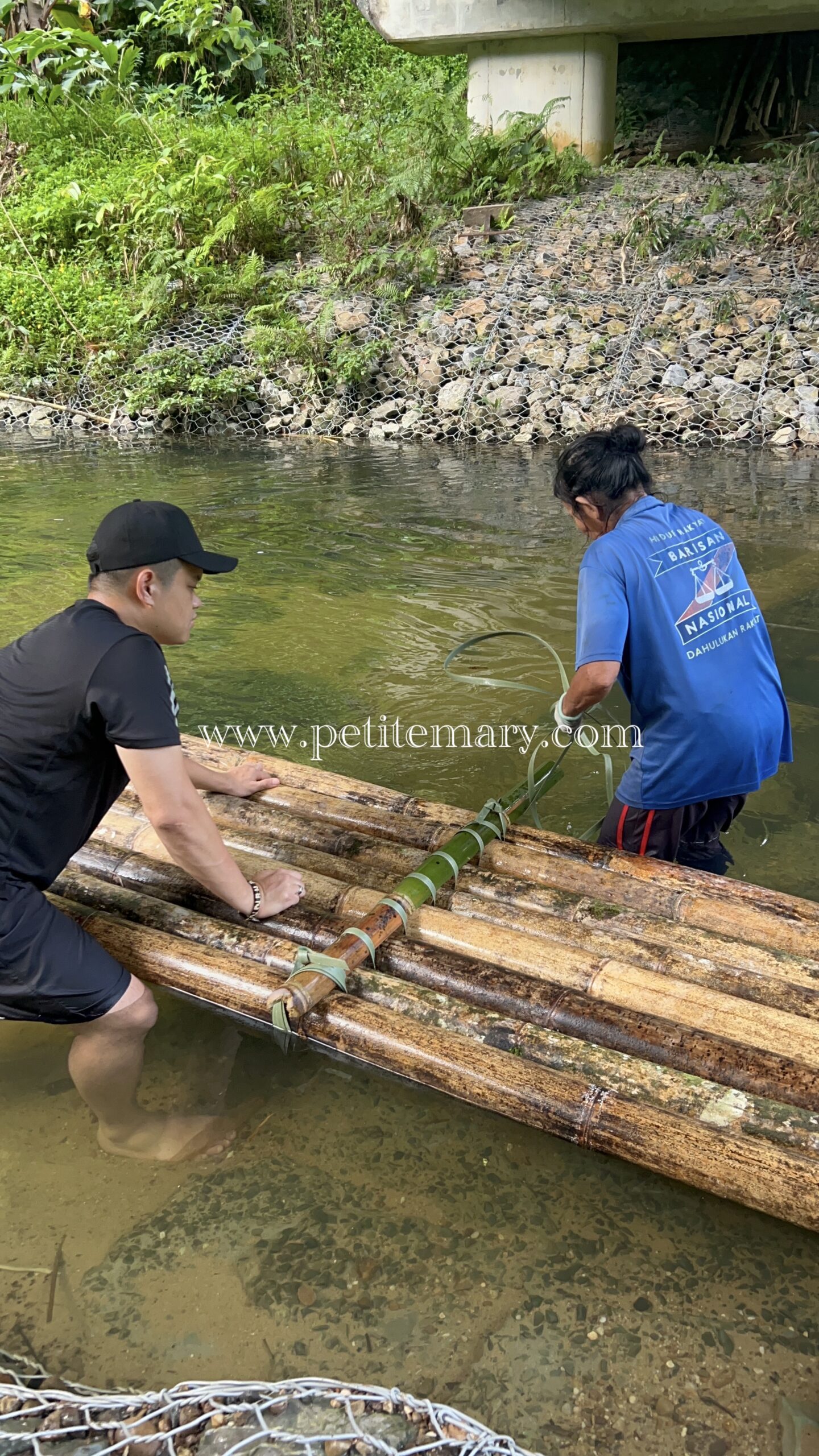
Apart from jungle trekking, we also went for Bamboo Rafting on the river just behind the longhouses. Can you guess with who? Hehe.
Of course, it’s with Kak Siti. When we first arrived, it was raining heavily, and we couldn’t do the jungle trekking on the first day.
The best part about bamboo rafting? We built the raft with Kak Siti! (Well, it was my husband who went in the water and did most of the work with Kak Siti, while I was trying to film most of the process 😛
What else did we do during our stay?
Well, we tried endless delicious, mouth-watering Bidayuh Cuisine like manok pansoh. Uncle Joseph had us try out Bidayuh’s traditional costumes. Plus, we also learned how to use blowguns!
Here are some of the pictures from our stay:

Nights are filled with the sounds of the pratuokng by Rambo. A piece of instrument made out of a single piece of bamboo wood. Yes, basically, if you make a mistake when carving the wood, you throw the whole thing out and start again.
Only a small number of people know and have the expertise to make it. One of them is Rambo.

Rambo taught us how to play and what each piece of music signifies. Sounds to be played when welcoming guests, rhythms that dance into the air impersonating bird chants.
It was as if we had our small Rainforest World Music Festival right at our doorstep. 😛
Suggested Read: Kundasang Trip Itinerary – All Budget-Friendly

Prepare for Your Longhouse Cultural Stay
Having the opportunity to stay at a longhouse can be very fulfilling and rewarding. Here are some of the things that you should take note of prior to your stay:
- Be prepared to adapt to the living conditions, as more isolated longhouses tend to have more basic amenities. This may include sleeping on a mattress under a mosquito net, using a squat toilet, or taking cold showers.
- Pack light and only bring essentials – comfortable attire, sturdy footwear or hiking sandals, toiletries, insect/leech repellent, sunscreen, a flashlight, and a poncho.
- Consider the high humidity and tropical weather. Hence, bring lightweight clothes or AIRism ranges.
- To stay is to experience. Be friendly and mingle with local neighbors. Show your respect and gratitude during your stay. If there are any events or ceremonies, engage in them.
Best Time to Visit Kuching Sarawak
The best time to visit Kuching Sarawak is during the warmest and driest months, from April to October. As Kuching is a rainforest tropical weather, it experiences both sunshine and heavy rain!
We went in early June for the Rainforest Music Festival. We experienced both hot sun weather (during the daytime) and heavy tropical rain (during nighttime to early morning throughout our stay.
My Two Cents – Bidayuh Sarawak Longhouse Experience
Is it worth it? Yes.
Would I stay at Annah Rais or try another longhouse in Borneo again? Yes.
It was a fulfilling 3 days in which I learned about one part of Malaysia I never knew about, or rather a side of Malaysia that most of us in Peninsular need to be exposed to.
We spent our days understanding Bidayuh culture, exploring the lush surroundings, engaging in cultural activities, and enjoying the company of the locals.
The hospitality and warmth throughout our stay are still felt today, even when I am back home, a sea distance away from Kuching.
This warmth made me feel welcomed and cherished, and it’s a testament to the people we meet along the way being the best part of traveling.
One of the things that I felt was unique about Sarawak was the fact that everyone lives in harmony, and it’s okay to have interracial marriages.
This cultural diversity was not just tolerated but celebrated, creating a truly unique and harmonious community. Differences were put behind, which I believe to be the true definition of being a Malaysian.
At least, that’s what I think.
I’d love for you to experience the same. I hope you find this article helpful while doing your research!
Related Articles:
Leave a Reply